TR pattern cutting
TR Pattern Cutting
What is TR pattern cutting?
-TR pattern cutting means Transformational Reconstruction, this is a form of origami pattern cutting which translates into immediate and intuitive 3D creations, in opposition to the more conventional way of drafting. (Fashion Capital, 2021)
During our creative pattern cutting we have explored transformational reconstruction and different techniques. First, we have started to work on basic bodies creating 2D designs and various shapes such as circles, squares, triangles, zig zag or wave lines to create interesting design within the garment. It’s a simple way to practice and explore the different shapes.
For those designs we have used a basic bodies with darts and drew a shape on to the fabric, making sure that the line goes through the bust point to eliminate the darts. By taking the seams of the shapes through the apex point it allows to eliminate the dart seams, however, the shape and the silhouette of the bodies will stay the same with small adjustments that may need to be made on the side or shoulder seam.
Using the book ‘Pattern Magic’ I have explored the technique of inserting a circular design line onto a basic body. It showed me how to insert a circular design on to a garment. However, I have altered the design a bit as I wanted to eliminate all the darts and have two pattern pieces, the front bodies, and the circle. (Nakamichi, T. (2010)
This technique is an interesting way to apply shapes onto the garment however, it’s not very efficient with the material used. A lot of the fabric is wasted. Which will simply go to the waste bin and to the waste land. Form research around 57% of clothing and material go to waste a year. The waste in landfills effects the environment and climate change. Using this technique of T pattern cutting is a very inefficient way to create shapes within the garments.
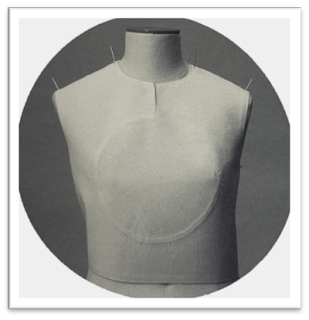
After creating the circular design, I have explored different techniques and different shapes.
One of the bodies I have created a square and triangle, again going through the apex point / bus line to eliminate the darts and creating a seamless bodies and leaving the focus point on the shapes. I have use darker fabric to make. The shapes a main feature on the front of the garment. This technique is quite interesting to explore in more advanced way. It would help to create applique on the garments without 3D designs making it more wearable and allowing to layer garments. It could be interesting to create unique seam lines and shapes in costumes, making a statement on a fashion piece.

Exploring various shapes, I have also tried zig zag and wave design. This is an interesting way to add a coloured panel onto a design. For this example, I have used basic bodies and creating a panel across the chest. Making sure that the lines go through the bust point to remove the darts and leaving the shape of the garment. I really like the contrast between the panels. It would be and interesting way to connect the pieces when using a patch work creating something more unique and making the design more aesthetically pleasing rather them simple blocks.


Using the transformational reconstruction technique, I have explored 3D designs. For this design I have used a simple skirt and applied the technique to the front of the skirt. This technique is a little different to the other creative seam technique, as we do not draw on the garment, for this I have created a 3D paper design and applied to the skirt. Marking the different sections that will form a pattern pieces. Cut out all the pieces and lay them flat to create new pattern pieces. Adding 1cm seam allowance to be able to sew the pieces together and keep the same sizing of the skirt. I really like this technique to create simple 3D shapes to your garment rathe then stitching 3D appliques onto the garment.


For my final project will not use this technique as my project is focused on zero waste. By exploring the transformational reconstruction, I have realised that his technique wastes a lot of fabric. As you create simple bodies and cut it up to create new pieces. The lay out plan from the pieces is not very efficient as it leaves a lot of spare fabric between the shapes. For my project I want to create designs that are 100% zero waste from the design, production, and construction process. This would be a very interesting feature in a zero-waste tailoring and adding 3D design on to a tailored jacket, however I would need to explore the technique further to create a way to make it more efficient and not to waste as much fabric during the production process. Also, the first technique with creative seams its very interesting way to add interesting seams onto a garment, however same as the 3D design it wastes a lot of the material. All the different shapes after adding seam allowance change shape and its very hard to create zero waste lay out plan as all the pieces do not match after the 1cm allowance been added.For my project I would like to explore the technique further and create my own spin on it to create creative seams and unique tailored designs, but also keeping my theme of zero waste tailoring.
Reference
1. FashionCapital. (2021). Learn How To TR Pattern Cut Like An Origami Expert. FashionCapital. https://www.fashioncapital.co.uk/insights/learn-how-to-tr-pattern-cut-like-an-origami-expert/
2. Nakamichi, T. (2010). Pattern Magic (1st ed.). Laurence King Publishing. (pg22-23)


Comments
Post a Comment